B.Sc. in Medicine
Program Profile
The programme is a six-year integrated, system-based, student-centered, and outcome-based curriculum, modeled after the University of Leicester's British curriculum. It is divided into two 3-year phases:
- Phase I (Foundation Phase): Focuses on foundational sciences with a 20-25% introduction to clinical sciences. Utilizes a module-based system (Semesters 1-6) that integrates subjects (e.g., anatomy, physiology, etc.) around bodily systems. Teaching is a combination of Large Group Lectures and intensive Small Group Discussions (SGD). It includes the Consultation Skills Foundation Course (CSFC) and the People and Disease (LwLTC) course.
- Phase II (Clinical Curriculum): Focuses on clinical sciences (reversing the Phase I proportion). Learning occurs entirely in a purely clinical environment (hospital wards and centers) through seminars, clinical rounds, and clinical skills training, organized into 16 Clinical Blocks. The overall philosophy shifts from an instructor-centric to a student-centered model that emphasizes active learning, self-reliance, inquiry-based investigation, and the development of the lifelong learner.
Occupational profiles of graduates
Graduates (M.B.Ch.B) are prepared for entry-level medical practice as a doctor (rotating resident/foundation training) and are equipped with the knowledge, skills, and professional values to practice safely and effectively, having achieved the comprehensive capabilities outlined in the Outcome-Based Curriculum.
Qualification awarded
Bachelor of Medicine and General Surgery (M.B.Ch.B)
Length of programme
Six (6) years (Divided into Phase I: 3 years and Phase II: 3 years)
Number of credits
277 ECTS credits
Mode of Study
Full time on campus and clinical setting
Read more about the programme
Get detailed information about the programme requirements, courses, credits, and educational objectives as a PDF file.
Program Educational Objectives (PEOs)
The overarching goal is to prepare future medical professionals to be lifelong learners who can adapt to continuous advancements in medicine.
Phase I Objectives: To gradually develop self-learning (active learning) skills; to provide essential knowledge and skills in medical sciences through integrated modules with continuous emphasis on clinical application; to teach patient communication and clinical skills using simulated and real patients; and to facilitate knowledge integration through problem-solving and the LwLTC thesis.
Phase II Objectives: To develop the student's general clinical skills by working full-time with practicing doctors in a purely clinical environment; to ensure they gain the right experience to develop specified competencies (Outcome-Based); and to provide experience in primary healthcare centers and through elective units.
Program Learning Outcomes
The curriculum is Outcome-Based, setting standards for newly qualified doctors across three core domains, which are aligned with key clinical presentations:
Outcomes 1: The doctor as a scholar and a scientist:
Biomedical Sciences: Apply principles and knowledge of anatomy, physiology, biochemistry, pathology, pharmacology, etc., to explain normal structure, disease mechanisms, and management.
Psychological and Social Sciences: Apply psychological and sociological principles to explain human behavior, varied responses to disease, and factors contributing to illness, treatment success, and health inequalities.
Population Health: Apply principles of health improvement, epidemiology, communicable disease control, and environmental/occupational hazards to medical practice.
Scientific Method: Apply scientific method to medical research, critically appraise literature, and formulate research questions.
Outcomes 2: The doctor as a practitioner:
Consultation: Carry out a consultation (history, examination, eliciting patient views, explanation, and support).
Diagnosis and Management: Interpret findings, formulate differential diagnoses, plan investigations/treatment (based on evidence and patient partnership), manage emergencies, and identify abuse/neglect.
Communication: Communicate clearly, sensitively, and effectively with patients, relatives, and colleagues, regardless of background, and in difficult circumstances.
Procedures and Prescribing: Provide immediate care (e.g., life support), prescribe drugs safely and effectively, and carry out practical procedures (as listed in Appendix 1).
Information Management: Keep accurate records and use information effectively while adhering to confidentiality.
Outcomes 3: The doctor as a professional:
Ethical and Legal: Behave according to ethical and legal principles, putting patient care first, respecting dignity, and understanding professional responsibilities.
Development: Reflect, acquire new knowledge, establish foundations for lifelong learning, manage time, and seek help when necessary.
Teamwork: Learn and work effectively within a multi-professional team, understanding and respecting the roles of others.
Patient Protection: Place patient needs and safety at the center, promote/maintain health and safety, and address concerns about colleagues' performance or conduct.
Programme structure diagram with credits

Yearly Timeline
Sept. 1, 2026
⚠️ First year students start around mid-October
⚠️ First year students start exams around 20 of January
July 1, 2027
Check out the full academic calendar on UoD's webstie.
Programme Coordinator
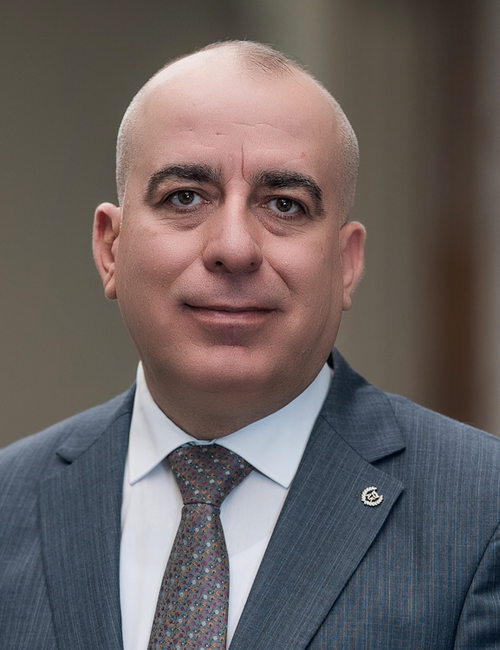
Professor in general surgery
Surgery
College of Medicine
University of Duhok
Apply to the Programme
Public undergraduate admissions in the KRG region are managed centrally by the Ministry of Higher Education through the online ZankoLine portal (regayzanko.com). After Grade 12 Baccalaureate results are released, high schools provide students with unique login credentials to rank their preferred universities and B.Sc. majors during a 10–14 day registration window. Final placement is automatically determined by the student's Grade 12 average, subject choices, and department capacity.